Question & answer
Tailgate Up or Down for Gas Mileage? What GM's Wind Tunnel Says
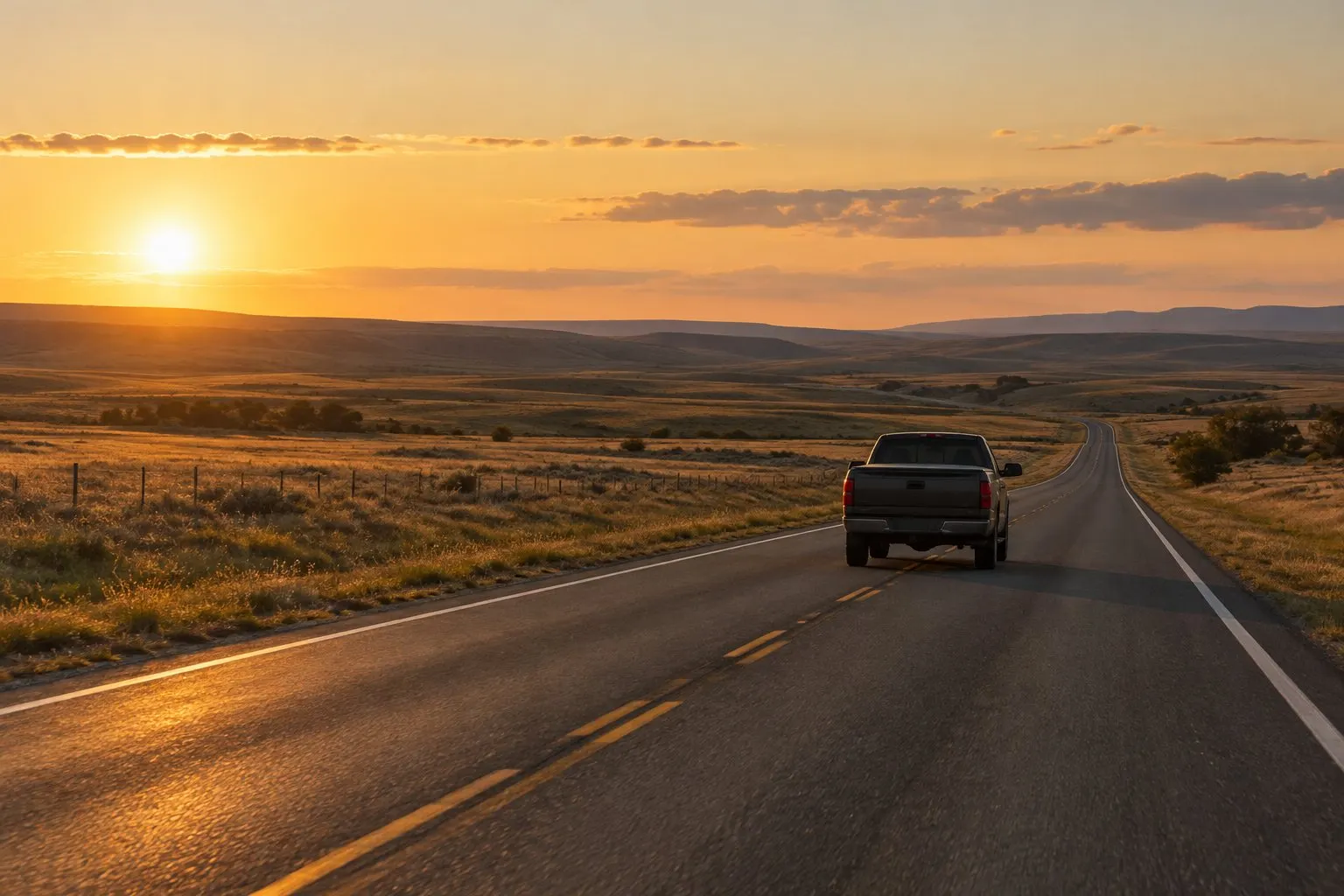
Keep it up. GM's aerodynamics engineer reported from the wind tunnel that a pickup is more efficient with the tailgate up, and that swapping the tailgate for a net is worse than having no tailgate at all. Driving with the gate down or a net in its place is a myth, not a fuel trick.
The short answer
Tailgate up. In 2013, GM aerodynamic performance engineer Diane Bloch said the tailgate-up position is more aerodynamically efficient, and that replacing the tailgate with an aftermarket net is worse than having no tailgate at all. Speed and roof loads matter far more: fueleconomy.gov says a roof-top cargo box can cut highway fuel economy by 6 % to 17 %.
Where the "tailgate down" idea comes from
The idea sounds logical. A closed tailgate looks like a wall standing in the wind, so dropping it or swapping it for a mesh net should let air flow through.
The wind tunnel says otherwise. When GM developed the 2014 Sierra, its aerodynamic performance engineer Diane Bloch spent more time with the truck in the wind tunnel than with any GMC pickup before it. The report from May 2013 says the tailgate-up position is the more aerodynamically efficient one, and that with the tailgate down, the benefit of the airflow over the bed is diminished. Her line on nets was blunt: replacing the tailgate with an aftermarket net is worse than having no tailgate at all.
In plain terms: the truck is developed in the wind tunnel as a box with its tailgate up. Lowering the gate or swapping it for a net changes that shape, and GM found the change does not help.
This page is part of our truck bed guide, where the rest of the tailgate pages live.
Gate up, gate down, net: what we can and cannot say
| Setup | What the sources say |
|---|---|
| Tailgate up | More aerodynamically efficient, per GM's engineer |
| Tailgate down | Benefit of the airflow over the bed is diminished, per GM |
| Tailgate replaced by a net | Worse than no tailgate at all, per GM's engineer |
| Tailgate removed | Dismissed by GM's engineer as a way to cut drag |
| Tonneau cover on | Discussed for airflow in the GM report, no MPG figure. No cover maker we read promises a saving |
We have no MPG figure for any of these rows. GM described the direction, not the size, and the effect will differ by truck, cab and bed. That is why we only tell you which way to set the gate.
What actually moves your MPG
If you want to burn less fuel in a pickup, the tailgate is a small lever. fueleconomy.gov names bigger ones:
- Speed. Gas mileage usually drops quickly above 50 mph.
- Roof loads. A large, blunt roof-top cargo box can cut fuel economy by about 2 % to 8 % in city driving, 6 % to 17 % on the highway, and 10 % to 25 % at interstate speeds. Rear-mounted boxes and trays cost much less. Take the box off when you do not need it.
- Weight. Extra weight in the vehicle lowers MPG, and it hits smaller vehicles harder than larger ones. Clear out the bed when you are not hauling.
For a pickup, that means a roof rack or a tall load sticking above the cab matters more than the tailgate position. Loads that stay inside the bed are the low-drag way to carry them.
Driving with the tailgate down for a load
Sometimes the gate has to be down, because the load is longer than the bed. That is a load question, not a fuel one. Use an extender or flag the overhang, as our truck bed extender guide explains. With a roll-up cover, the cover must be fully rolled and strapped for long or tall cargo, as Gator's sheet says, and never driven partly open. Details are on driving with a roll-up cover open.
The most fuel efficient pickups, by the EPA numbers
fueleconomy.gov's 2026 list of the most efficient vehicles has these pickups at the top:
| Class | Truck | EPA combined |
|---|---|---|
| Small pickup | Ford Maverick HEV FWD, 2.5 L hybrid | 38 MPG |
| Standard pickup | Chevrolet Silverado 2WD, 3.0 L turbo six | 25 MPG |
| Standard pickup | GMC Sierra 2WD, 3.0 L turbo six | 25 MPG |
| Standard pickup, electric | Rivian R1T Dual Max (22 in wheels) | 87 MPGe |
If MPG is your top priority, the truck you buy matters far more than anything you do with its tailgate.
Where a cover fits in
People buy a roll-up cover to keep the bed dry, hidden and tidy, and those are the reasons we recommend one for. If the truck is already on the road with the tailgate closed and nothing on the roof, you have done what the sources support for fuel. To pick a cover for your truck and bed, start with the best roll-up tonneau covers, and see soft vs hard roll-ups if you are torn between vinyl and slats.
What owners ask
Do tailgate nets help gas mileage?
Not according to GM's wind tunnel work. GM engineer Diane Bloch said replacing the tailgate with an aftermarket net is worse than having no tailgate at all. Keep the factory tailgate on and closed.
Does removing the tailgate help gas mileage?
GM's engineer dismissed removing the tailgate or leaving it down as a way to cut drag. The tailgate-up position came out as the more efficient one. Removing it also leaves you without the back wall your cover seals against.
Does a tonneau cover change MPG?
We read no maker document or government source that puts a number on it. The GM report discusses covers only in terms of airflow, without an MPG figure. So we do not claim a saving, and you should be wary of anyone who promises one.
What is the most fuel efficient pickup truck?
On fueleconomy.gov's 2026 list, the most efficient small pickup is the Ford Maverick hybrid with front-wheel drive at 38 MPG combined. Among standard pickups, the 2WD Chevrolet Silverado and GMC Sierra with the 3.0 L turbo six lead at 25 MPG combined.
Sources
Where to next
- OverviewTruck bed guideA plain guide to the truck bed: what each part is called, real inside sizes from Ford and Toyota, and how to protect, load and sleep in it with a cover on.
- ComparisonBest roll-up coversThe best roll-up tonneau cover is the one titled for your truck, years and bed. One start point per truck, chosen from documents we could read, not from any test.
- Question & answerCan You Drive With a Roll-Up Cover Open?Yes, if the cover is fully rolled and strapped. Gator's sheet says never partly open, and warns against stowing it against the cab. What else its rules cover.
- ExplainerBed extendersA truck bed extender turns the lowered tailgate into usable bed length. How flip-over and hitch-mounted types differ, what the install asks, and the cover rules.
- ComparisonSoft vs hardSoft or hard roll-up tonneau cover? Vinyl vs slats, install, weather, load and choice by truck. Take a soft one for most trucks.
Who is behind this
rolluptonneaucover.com Editorial Team
Truck fit and buying advice
We are the editorial team at rolluptonneaucover.com. We read listing titles, maker install sheets and truck makers' own bed specifications and sort them truck by truck, with sources on every page. Nobody here has bolted these covers to a truck, and nothing was measured in a lab. We say so plainly.
- Listing titles and maker sheets read
- Sources on every page
- No installs and no lab work
- Publisher details in the imprint